
One of the best things about Dublin is how quickly you can leave it.
Thirty minutes on the DART and you’re on a cliff path with seals below you. An hour and a bit on a bus and you’re in a glacial valley with a round tower and a thousand years of monks. Here are the best days out, starting with the easy ones.
By DART and train (no car needed)
Howth
The classic. Fishing harbour, seals, seafood and the Howth Cliff Walk, all at the end of the DART line. Full guide: Howth day trip.
Malahide
A pretty seaside village with a real castle: Malahide Castle and Gardens, with its guided tour, walled garden, butterfly house and fairy trail, plus the Casino Model Railway Museum just across the road. Take the DART or train to Malahide, about 25 minutes. Walk the coast path to Portmarnock afterwards if you’ve the legs.
Portmarnock and the Velvet Strand
Take the DART to Portmarnock and walk out to the Velvet Strand, a long, flat, sandy beach where the aviator Charles Kingsford Smith took off in 1930 to fly the Atlantic westwards to North America. You can walk the coast between Portmarnock and Malahide, a few kilometres along the shore.
Dalkey and Killiney
South on the DART to Dalkey: a medieval village with Dalkey Castle and Heritage Centre, good pubs, and the walk up Killiney Hill for one of the best views in Ireland, across Killiney Bay to the Wicklow Mountains. People compare it to the Bay of Naples. People in Dalkey, mostly.
On the way, stop at Sandycove for the free James Joyce Tower and the Forty Foot, where locals swim in the sea all year round and look at you as if you’re the strange one.
Skerries, Rush and Donabate
Along the north county coast by train: Skerries with its harbour, windmills and coastal walks; Rush with its long beaches; and Donabate for Newbridge House and Farm. Quieter, and very few tourists.
By bus
Glendalough
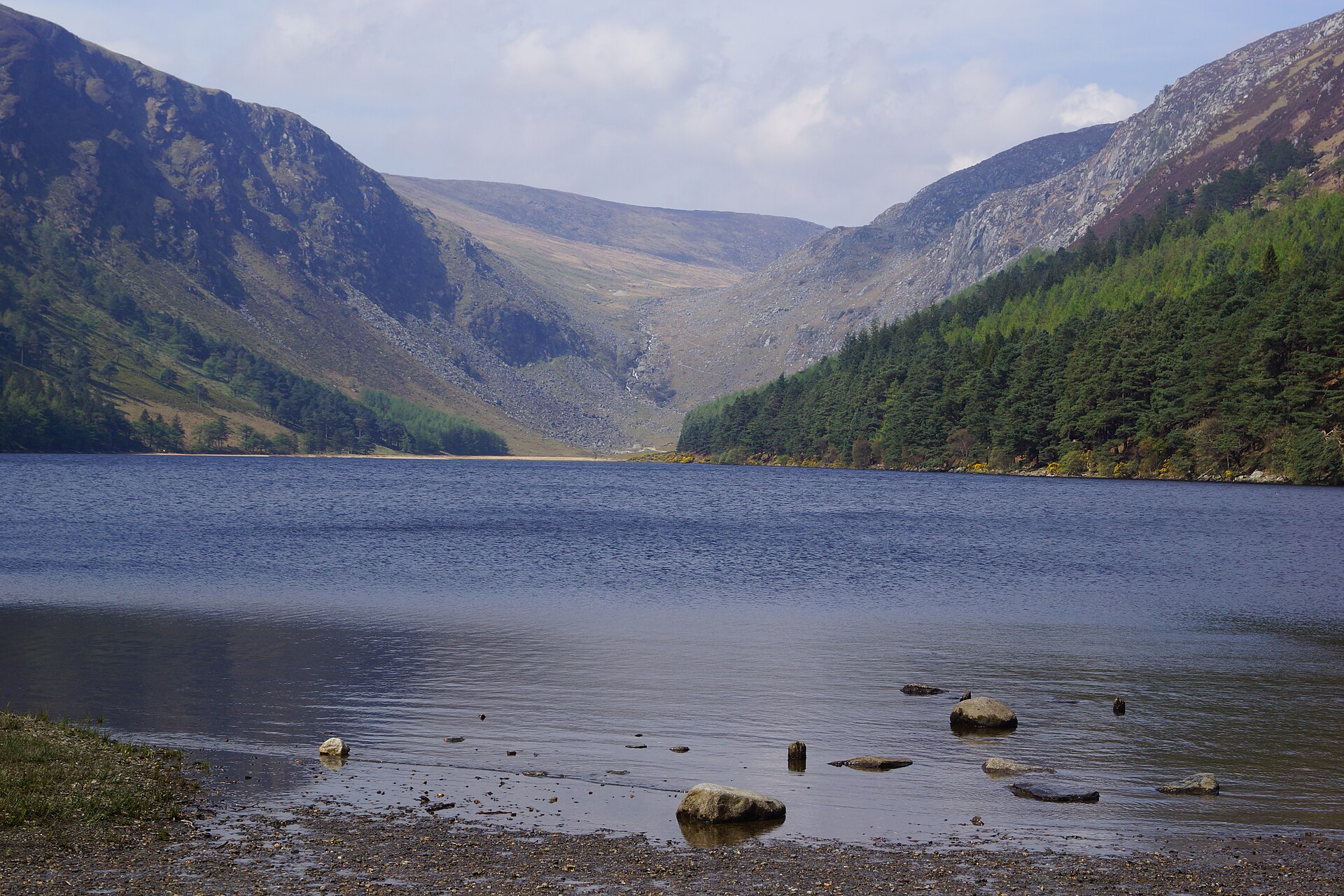
In the Wicklow Mountains, a 6th-century monastic settlement founded by St Kevin, with a round tower, ruined churches, a cathedral and two lakes in a glacial valley. The monastic site is free to wander and open all the time. There’s a visitor centre with its own ticket and parking charges at the car parks.
Without a car, the St Kevin’s Bus runs from the city centre to Glendalough. The journey takes about 90 minutes, and it’s a long day, so check the current timetable and fares on its website before you go.
Walk up to the Upper Lake, and if you’re fit, the Spinc trail above it. If you’re not, the walk along the lake shore is beautiful too.
Powerscourt
Near Enniskerry, about 40 minutes south of the city, with gardens named among the best in the world and the highest waterfall in Ireland. Gardens from €10.50. Many Glendalough tours stop here too. More in castles and stately homes.
The Wicklow Way
Ireland’s oldest waymarked long-distance trail starts in Marlay Park in south Dublin. You don’t have to walk all 130km or so. A day on the first section through the Dublin Mountains is plenty.
The long day tours
These are full-day coach tours, usually 12 hours or more, and for most people they only make sense as an organised tour:
- The Cliffs of Moher on the west coast, usually combined with the Burren and Galway.
- The Giant’s Causeway in Northern Ireland, often with Belfast and the Dark Hedges.
- Newgrange and the Boyne Valley, the 5,000-year-old passage tomb, older than the pyramids, about an hour north. Access to Newgrange itself is by guided tour from the Brú na Bóinne visitor centre, and it books up.
- Kilkenny, a medieval city with a castle.
Honest advice: one long tour is plenty on a short trip. They’re long days on a coach. If you only have three days in Dublin, Howth and Glendalough will give you more for less time on a bus.
Which day trip should I choose?
- Half a day, no car: Howth.
- A castle: Malahide.
- Mountains and history: Glendalough.
- Gardens: Powerscourt.
- A swim and a pint: Sandycove and Dalkey.
- The “big” Ireland: one organised trip to the Cliffs of Moher or the Giant’s Causeway.
For trains and tickets, see getting around Dublin. For more to do in the city, see our guide to things to do in Dublin.