Researched and checked by Tourist Information Dublin · How we research
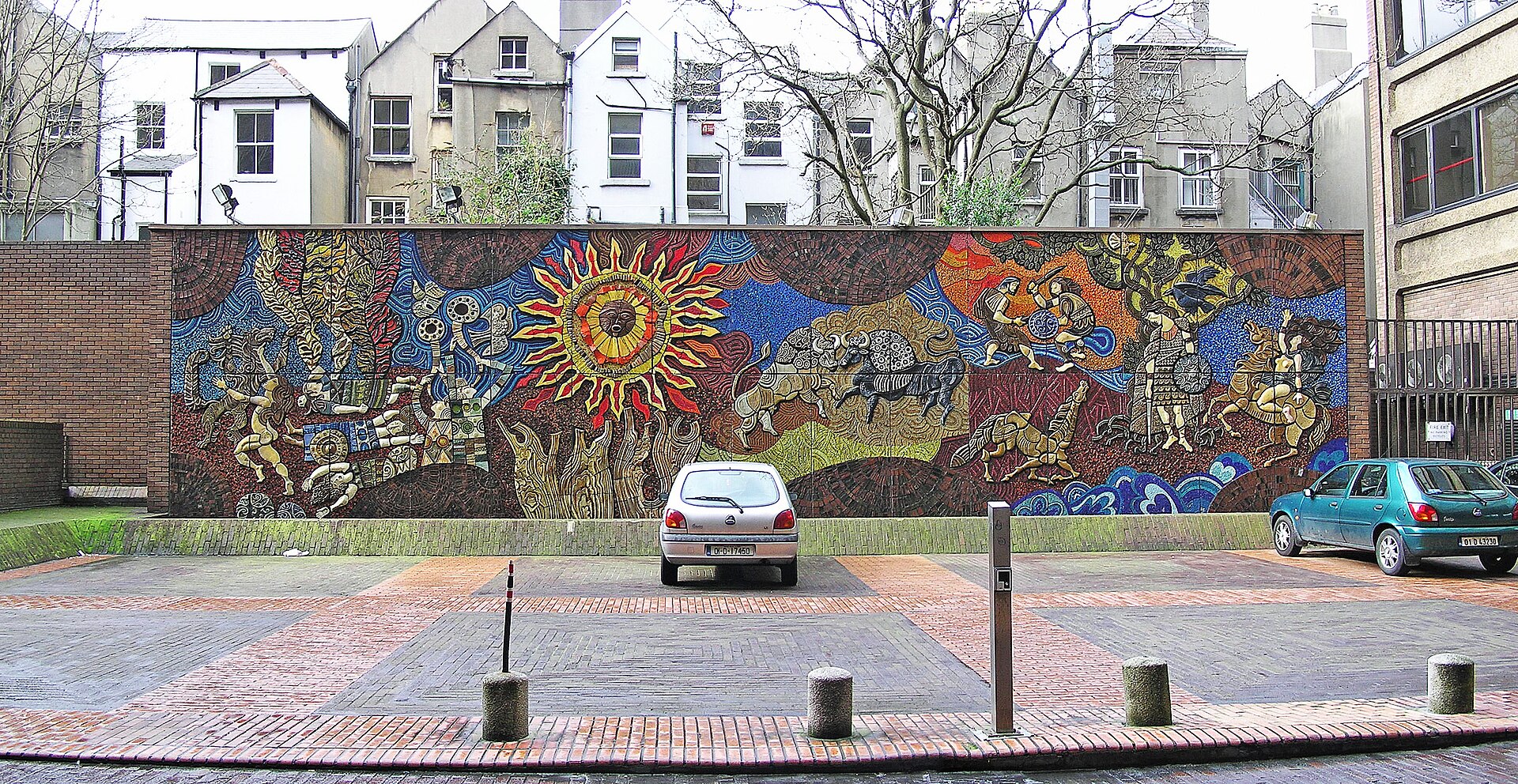

Dublin is a city you have to look at sideways.
Straight on, it gives you the obvious things. Big doors. Big pubs. Big history. You get the postcards and the bus commentary, and the feeling you’ve “done” it by Tuesday afternoon.
But tilt your head, slow down, and stop following the person holding the umbrella in the air, and there’s another Dublin underneath. Painted on walls. Carved into stone. Hanging above your head while you check your phone.
Most visitors walk straight past it.
The walls that talk back
Dublin doesn’t announce its street art. There are few plaques and no arrows to the interesting bit.
You’ll find murals down lanes that feel like shortcuts rather than destinations. A splash of colour behind a delivery van. A painted face watching you from a gable end while you work out whether the café is still open.
Around the edges of Temple Bar, away from the stag parties and novelty hats, there are walls that change every year, sometimes every month. Nothing’s permanent. That’s half the point.
The details above your head
Everyone photographs the Georgian doors. Bright colours, brass knockers, very shareable.
Almost nobody looks above them.
The fanlights over Georgian doors are some of the quietest art in the city: curved glass and delicate ironwork, patterns that repeat just often enough to make you think you’ve seen them before. There are beautiful ones around Merrion Square and Fitzwilliam Square, but the best are on ordinary streets where nobody stops, and you notice them by accident.
The painted boxes
Dublin’s grey electrical and traffic-light boxes have been painted by artists all over the city, under a long-running city council scheme. Once you notice one, you’ll see them everywhere: portraits, landscapes, cartoons and in-jokes, on street corners where you’d never look twice.
The lanes people rush through
Dublin’s lanes are treated like mistakes: narrow bits between proper streets, places you walk faster. That’s where a lot of the good stuff lives. Stencils, stickers layered into accidental collages, a line of poetry painted low on a wall where you’ll only see it if you stop to tie your shoe.
Smithfield and the north inner city
For something bigger and bolder, head to Smithfield, Stoneybatter and the streets north of the river. The murals there take up whole buildings and stare straight back at you: political sometimes, historical sometimes, occasionally just strange.
People think street art is always about rebellion. In Dublin it’s often about memory: who was here, what was lost, what’s being argued about this week. You don’t need to understand all of it. You just need to notice it.
Where to look: a street art walk
Street art in Dublin changes all the time, so instead of a list of murals that may have been painted over by the time you read this, here are the areas where you’ll always find something, in a loop you can walk in about two hours.
- South Great George’s Street and Drury Street. Start at George’s Street Arcade and look down the side lanes and up at the gable walls around the creative quarter.
- Temple Bar’s back streets. Cow’s Lane, Crow Street and East Essex Street, around the Project Arts Centre, where some of the city’s best-known political murals have appeared over the years.
- Across the river to Capel Street and Smithfield. Big walls, painted shutters and shop fronts, especially in the streets between Capel Street and Smithfield Square.
- Stoneybatter. Village-style streets, with murals and painted boxes on the corners.
- Back along the quays past the Four Courts, looking for painted utility boxes on the way.
Other good areas: the Liberties around Francis Street and Meath Street, Portobello and Camden Street, and Grand Canal Dock, where hoardings around building sites are often painted.
Ghost signs
Look high up on old buildings for faded painted advertisements from a century ago: shop names, tea brands, coal merchants and pubs that closed long ago. They’re called ghost signs, and Dublin has plenty, especially around Thomas Street, Capel Street and the north inner city.
Art you can walk into
- Harry Clarke’s stained glass at Bewley’s on Grafton Street: free if you buy a coffee.
- The plasterwork of Powerscourt Townhouse Centre, a Georgian house turned shopping centre. See shopping in Dublin.
- The statues, from Molly Malone to the Famine figures. See Dublin’s statues.
- The free national galleries. See free things to do in Dublin.
Street art etiquette
- Photograph the walls, not the people who live behind them. Many murals are on homes and businesses.
- Don’t add your own tag. That’s graffiti, and it’s an offence.
- If an artist is working, ask before filming them.
- Guided street art tours run in the city if you’d like someone to explain who painted what and why.
Why most people miss it
They’re busy. They’ve got a list. They’re walking with purpose.
Dublin rewards the opposite. Stop to let someone pass. Look up while you wait for the lights. Take the long way to nowhere in particular. That’s when the city shows you something small, human and slightly unfinished.
That’s the real gallery. No ticket. No opening hours. And if you blink, you’ll miss it.
For the galleries with actual doors, see our guide to Dublin museums and galleries. For the statues, see Dublin’s statues.
Planning your trip? Prefer to have someone point things out? Our guide to things to do in Dublin includes a walking tour that covers the highlights and hidden corners.